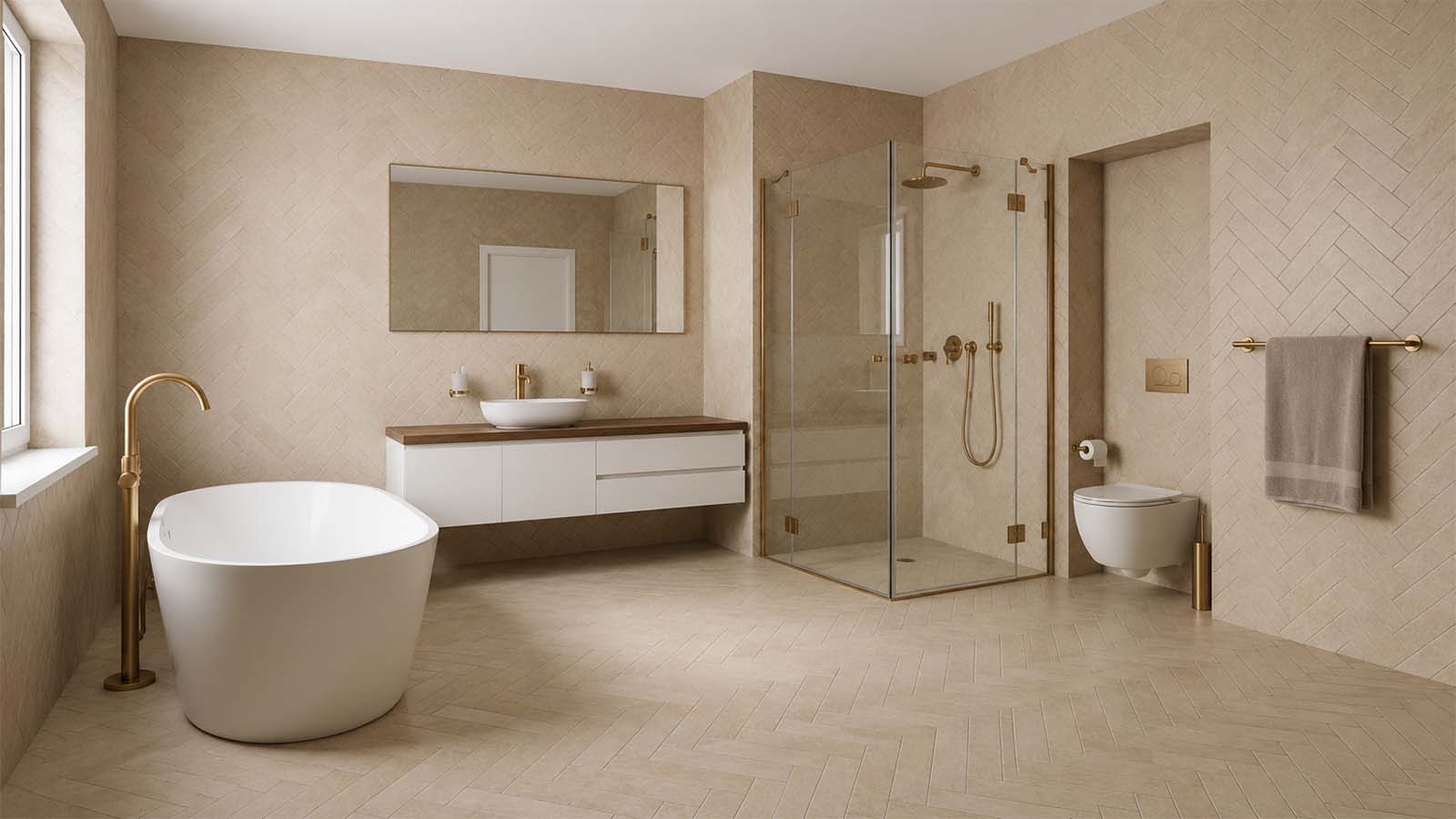
How to choose bathroom accessories that work together: the mixing rules designers use, which finishes go with what, and what to buy first.
You've done everything right. New tiles, a nice mirror, a rail you were genuinely excited about, and somehow the room still doesn't feel finished. It looks like three separate trips to three separate shops rather than one bathroom.If that sounds familiar, the problem almost certainly isn’t taste. It’s the end. Get the metal right, and matching bathroom accessories stops being a guessing game.
Get This One Thing Right First
You don't need everything to match. You need one finish to lead and one to support it, and both need to take their cue from your taps rather than each other. That single habit fixes most mismatched bathrooms before you've bought a single hook.
Nobody Actually Wants a Perfectly Matching Bathroom
Here's the thing about a bathroom where every single item is identical: it tends to feel a bit flat, more like a hotel corridor than somewhere you'd actually want to be. What looks put together in the bathrooms people admire isn't sameness, it's a kind of family resemblance. Chrome taps, a chrome towel rail and a brushed nickel mirror frame can sit together perfectly happily, because chrome and brushed nickel are cousins, not strangers.
Designers talk about coordinated finishes rather than matching sets, and once you see the difference, you can't unsee it in every mismatched bathroom you've ever stood in.
The Two-Finish Trick That Does Most of the Work
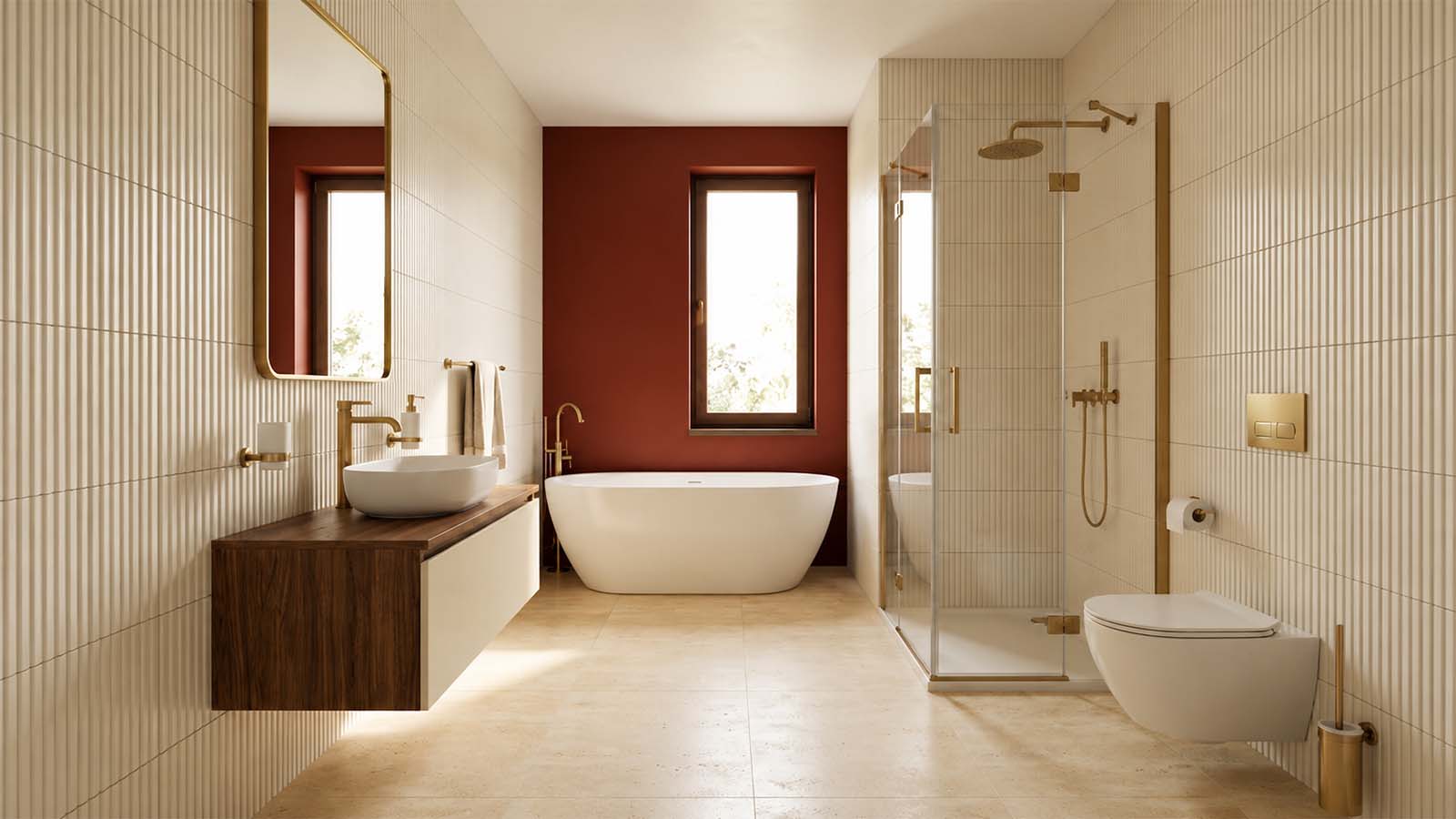
This is really the whole guide in one paragraph. Pick a dominant finish, the metal that shows up on your taps, shower valve and towel rail, because those are the biggest, priciest pieces and the ones you're least likely to change. Then pick a single accent finish for a handful of smaller items, a hook here, a soap dispenser there.
A third finish can sneak in, but only in tiny amounts, one black-framed mirror in an otherwise brass-and-white room, say, and should never spread across more than one item. The second and a third finish starts turning up on multiple pieces, the room stops looking styled and starts looking like it happened by accident.
Look at What's Already Screwed to the Wall
Before you buy anything, take stock of what you can't easily change: taps, shower valve, radiator, door handles. These are expensive and disruptive to swap, so your accessories need to follow their lead rather than fight them. Chrome taps and a matt black accessory set is a battle you'll be having every time you walk into the room.
It helps to physically stand in the doorway and count up what's permanent. Tap finish, radiator or rail, door handle, shower screen frame if there is one. Whichever finish shows up most often is your dominant finish, whether you meant to choose it or not. Working with that, instead of trying to override it, saves more time than anything else in this whole process.
A Quick Tour of Every Finish, and the Mood Each One Sets
Chrome is cool, bright, properly reflective, and it comes alive in a bathroom with decent natural light. Brushed nickel is chrome's calmer cousin, the same cool family but softened, no glare. Matte black bathroom accessories bring proper contrast and read as modern instantly, though in a small or dark room they can shrink the walls a little, so keep the rest of the palette light if you go this way.
Brushed brass bathroom accessories and satin brass bathroom accessories are warm and a bit forgiving, and they sit beautifully against warm white, deep green or natural stone. Gold bathroom accessories are the shinier, more formal counterparts to brass accessories. Gunmetal bathroom accessories land somewhere between black and chrome, giving you depth without going full dark. White bathroom accessories are the quiet option that basically gets on with everyone, a neutral base or a gentle accent, whichever you need.
The one thing worth remembering through all of this: warm metals want warm company, cool metals want cool company. Brass, gold and copper are warm. Chrome, nickel and steel are cool. Staying inside one family is easy. Crossing between them takes a bit more care, which is exactly what the next section covers.
So Can You Actually Mix Metals?
Yes, and don't let anyone tell you otherwise, but it does need a bit of structure behind it. Pair a warm metal with a cool one rather than throwing two warm or two cool finishes into the ring together. Use your accent at least twice, because a single lonely brass hook among a sea of chrome looks like a mistake, while the same hook plus a matching dispenser looks deliberate. And keep the balance lopsided, roughly seventy percent dominant finish to thirty percent accent, so one clearly leads and the other clearly supports.
|
Finish |
Reads as |
Sits well with |
|
Chrome |
Cool, bright |
Brushed nickel, white, black |
|
Brushed nickel |
Cool, soft |
Chrome, white, matte black |
|
Matte black |
Bold, modern |
Brass, gold, white |
|
Brushed brass |
Warm, textured |
Matte black, white, stone |
|
Satin brass |
Warm, refined |
Warm whites, timber, terracotta |
|
Gold |
Warm, formal |
Brass, white, deep green |
|
Gunmetal |
Moody, neutral |
Black, brass, white |
|
White |
Neutral, flexible |
Everything above |
Keep that table nearby if you're standing in front of a shelf of options trying to work out what colour bathroom accessories actually belong with the tap you've already got.
It's Not Just the Metal, It's the Shape Too
Everything so far has been about finish, but the shape of a piece matters just as much once you know your finish. A period or traditional bathroom—ornate taps, a roll-top bath, panelled walls—tends to call for accessories with a bit of detail in them: a fluted edge on a soap dispenser or a slightly heavier robe hook, rather than anything too stripped back. Pair that kind of room with a bare, ultra-minimal chrome bar and it can look oddly out of place, like a modern add-on to a room that was never meant to have one.
A modern, minimalist bathroom wants the opposite. Clean lines, flat panels, nothing fussy. Here, an ornate or heavily detailed piece stands out for the wrong reasons, so straight bars, simple cylindrical hooks and unfussy dispensers suit the room far better than anything with visible flourishes.
Scandi-style bathrooms—all pale wood, white walls and soft, natural textures—generally favour understated shapes too, but lean warmer in finish than a strict minimalist room would. This is where a brushed brass or matte white accessory set tends to outperform chrome, since chrome can read a touch clinical against warm timber. Industrial-style bathrooms—exposed brick, black metal window frames and concrete floors—are the one place where gunmetal and matte black genuinely shine, and where a slightly more utilitarian, unfussy shape suits the room better than anything delicate or ornamental.
The short version: work out which of these four rough categories your bathroom already leans towards, then let both the finish and the shape of your accessories follow that lead, rather than picking pieces you like the look of in isolation and hoping they fit the room once they arrive.
The Names That Trick Everyone
Here's a genuinely useful thing to know before you order anything online: brushed brass, satin brass and gold photograph almost identically under studio lighting, and then look nothing alike once they're on your wall under your own light bulbs. Brushed brass has visible texture and a warm, slightly dulled tone. Satin brass sits between brushed and full polish, smoother than brushed but not as bright as gold. Gold is the loudest of the three.
Chrome, brushed nickel and polished nickel play the same trick. Chrome is the coolest and shiniest. Brushed nickel is soft and matte with barely any glare. Polished nickel sits in the middle, warmer than chrome, shinier than brushed nickel. If you're buying pieces from different ranges, order a sample first. Trusting a product photo alone is how mismatched bathrooms happen.
What You Actually Need (Not What the Set Includes)
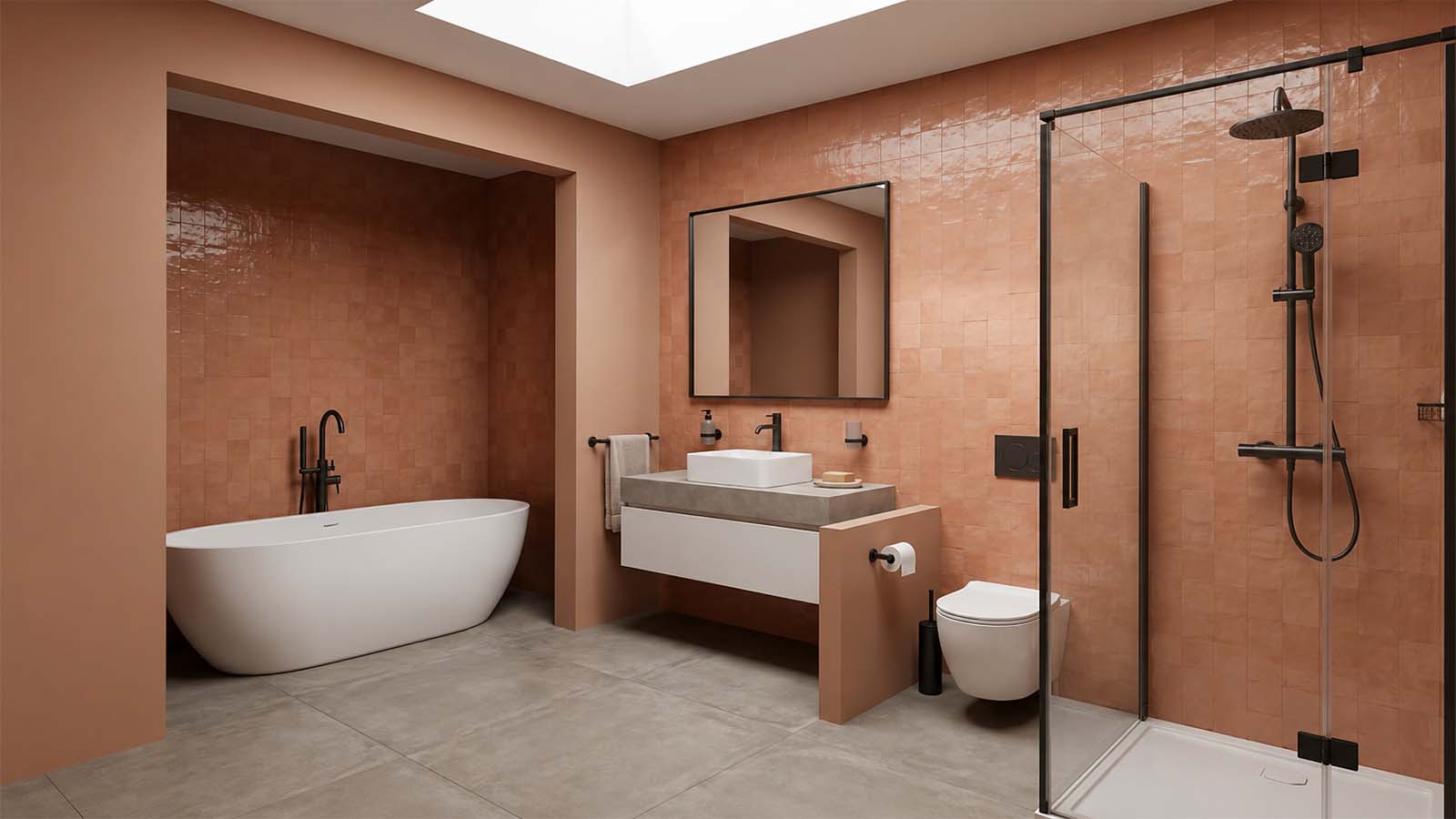
Most bathrooms genuinely only need a handful of pieces to feel complete, and the ones that matter most are the towel rail, the toilet roll holder and a robe hook, simply because they're used every single day and sit right at eye level. After those three come a towel ring, a soap dispenser and a toilet brush holder. A bathroom shelf, a bathroom bin and a bathroom mirror round the room off. You don't need all nine, and a shower basket is worth adding if your enclosure doesn't already have built-in storage.
That's a decent working answer if you've been wondering which bathroom accessories you need without buying half a catalogue you'll never notice. It's also worth saying that a mirror rarely needs to match the metal theme exactly, since a plain, unframed mirror works with almost any finish going. Reserve the coordinated metal thinking for the pieces that actually have a metal frame or fitting, and let a simple glass mirror sit quietly in the background if that's what suits the room.
Buying It Bit by Bit Without It Looking Half-Finished
If the budget means spreading purchases over a few months rather than one big order, buy the towel rail, the roll holder and one hook first. These get seen and touched the most, so they set the tone for everything that follows. A soap dish or a bin can wait. Genuinely nobody clocks those until the day they're missing.
This staged approach also happens to be one of the better answers to how do I make my bathroom look more luxurious without spending a fortune in one go. Putting slightly more budget into the three pieces everyone actually touches beats spreading the same money thinly across nine cheap items that all look, and feel, a bit disposable.
Skip the Matching Set. Here's Why
Buying a full matching set from one range is the easy route, and there's nothing wrong with taking it. But it's rarely the most interesting result, because everyone else who bought that same set has the exact same bathroom as you do. Matching the metal finish across a few different ranges, rather than sticking to one brand, usually gives the room more personality while keeping everything cohesive.
This suits anyone hunting for genuinely designer bathroom accessories UK wide too, since a lot of the smaller, design-led makers only produce a handful of pieces rather than a full set. Buying the rail from one and the mirror from another, in the same finish, is completely normal, and it's how most people shopping for luxury bathroom accessories that UK retailers stock actually put a room together.
Where to Actually Spend the Money
Not every piece deserves the same slice of the budget. Put the most into your towel rail, since it's the largest item and a cheap one shows its age fast. The robe hook and toilet roll holder come next, as they're handled daily and sit at eye level.
After that, spend less. A soap dispenser, toothbrush holder, bin and toilet brush holder rarely need to be expensive, since nobody examines these closely. As a rough split, put around half your budget into the rail, hook and roll holder, and spread the rest thin. It's the accessory equivalent of buying one good coat rather than five cheap ones.
Small Bathroom? Buy Less, Not More
In a small bathroom or cloakroom, restraint pays off more than anywhere else. A rail, a ring and a hook often do the same job, so pick two rather than cramming all three onto one wall. Overload a small space with every finish and every product on the essentials list above and it stops feeling curated and starts feeling crowded. One well-placed brass hook against a plain white wall will always beat four competing items fighting for the same square metre.
The Measurements Nobody Mentions
A robe hook generally sits somewhere around 1.5 to 1.7 metres off the floor, within comfortable reach for most people. A toilet roll holder usually goes just beside and slightly forward of the WC, close enough that nobody has to stretch for it. A towel rail needs breathing room in front and to the side so a folded towel can actually hang rather than just flop against the wall behind it. None of these are hard rules, but they're a sensible starting point before you pick up the drill, and it beats patching plasterboard because a hook sat two inches too low.
Screwed In or Sitting There
Wall-mounted bathroom accessories commit you to a fixed layout, but they clear floor and surface space, which matters far more in a small room than it sounds like it should.
Freestanding pieces, a soap dish on the basin edge or a little shelving unit in the corner, are easier to shuffle around later, handy if you like to rearrange things or you're renting and can't drill into tiles. Most bathrooms end up somewhere in between: fix the pieces that never move, the rail and the roll holder, and leave the smaller decorative bits freestanding so the room can change without more holes appearing in the tile.
If you're renting, this distinction matters more than usual. Landlords are often fine with a rail that replaces an existing towel radiator, since that's a like-for-like swap, but far less keen on new holes drilled purely for decoration. Lean on freestanding and adhesive-mounted pieces for anything beyond the essentials, and you'll get most of the coordinated look without a single conversation about the deposit.
Which Finish Actually Survives Your Bathroom
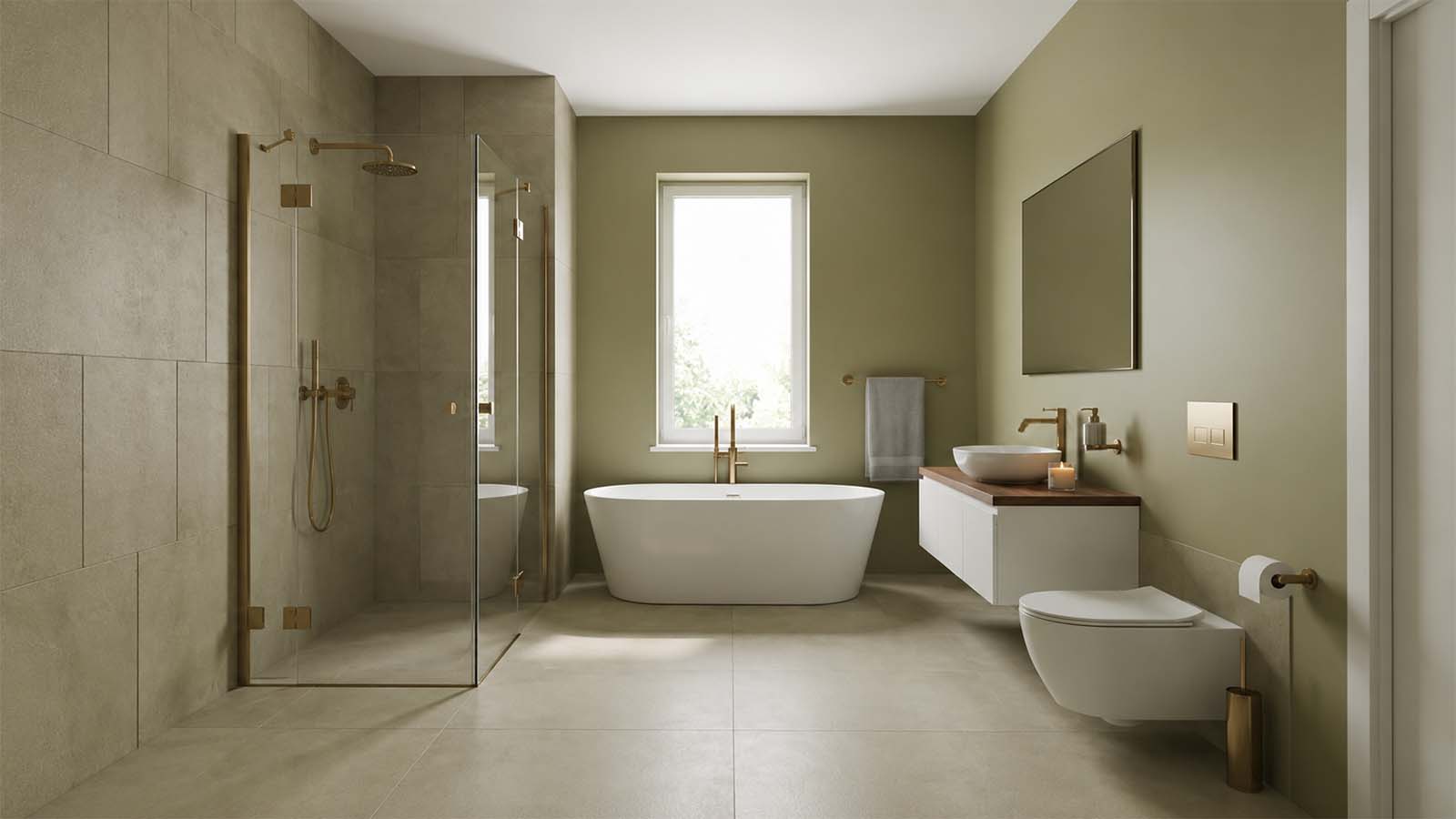
Steam, splashback and hard water aren't kind to every finish equally. A matt finish hides water spots and fingerprints far better than a polished one does, so a matt black or brushed nickel piece near the basin will look tidy for months longer than a mirror-polished equivalent stuck in the same spot. A PVD coating on brass and gold pieces resists tarnish and everyday wear noticeably better than an unlacquered finish, worth checking before you commit anything to a shower enclosure or a basin that gets splashed constantly.
It's worth thinking about this room by room too. A guest cloakroom that sees light use once a week can get away with almost any finish, since it simply isn't exposed to steam and splashing often enough to matter. A busy family bathroom used by three or four people every morning is a different story entirely, and that's exactly where a durable, coated finish earns its higher price tag. If you're choosing between two similar pieces and one costs a little more because of its coating, that difference tends to show up in how the bathroom looks two years down the line, not on day one.
Where Most Bathrooms Fall Apart
It usually comes down to the same handful of habits. Buying accessories before checking the taps, so the whole room ends up built backwards. Introducing three or more finishes into a small space, which reads as clutter rather than character. Ignoring lighting altogether can make a warm brass piece look strangely cold and flat under the wrong bulb. Cramming every item from the essentials list onto one small wall. And treating accessories as an afterthought, grabbed in a rush once everything else is done, when they're actually the finishing touches most people notice first.
If you're scrolling a modern bathroom accessory set or a full bathroom accessories collection online right now, keep this in mind: a beautifully lit product photo won't fix a mismatched room on its own. The finish still has to earn its place next to what's already on your wall.