Introduction
Modern or traditional bathroom? Discover what truly separates the two styles, which one suits your home best, and whether mixing them really works.
A sleek wall-hung suite can look strangely out of place in a Victorian terrace, sitting awkwardly beneath the cornicing and high ceilings the rest of the house is built around. Turn the idea on its head, and a freestanding roll-top bath dropped into a brand-new build can look like a prop left behind after a photoshoot. Neither is wrong in itself. The style may simply feel inconsistent with the character of the property. Choosing between modern bathroom design and traditional bathroom design is one of the earliest decisions in any renovation, and it shapes far more than most people expect, from the basin you eventually buy to how the room actually feels to stand in every morning.
This guide is not here to tell you which style is better, because neither one is. It is here to help you work out which one your house, your budget and your daily habits actually suit, so the bathroom you end up with still feels right in ten years, not just on the day it is finished.
Modern and Traditional Bathrooms at a Glance
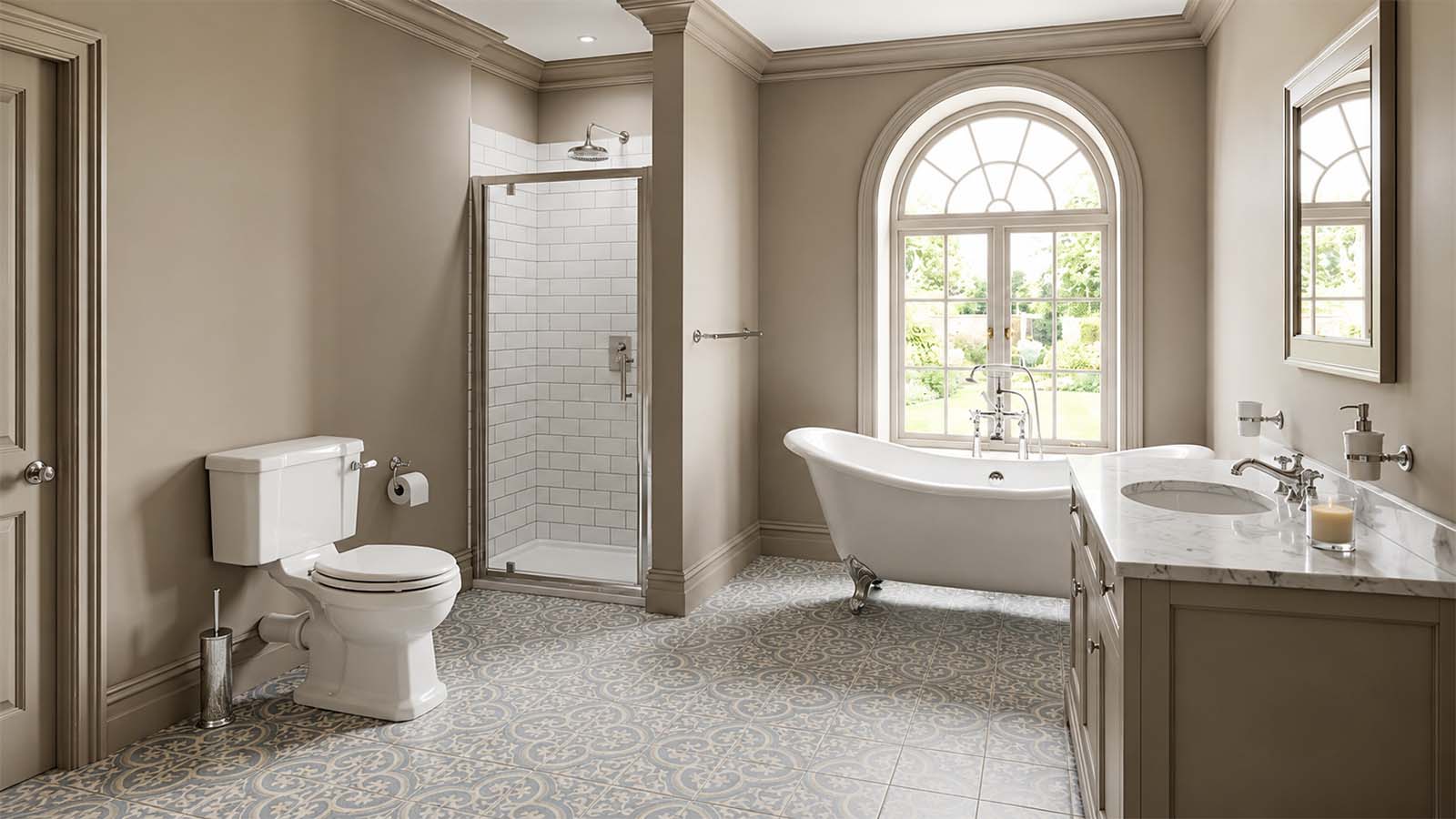
A modern bathroom hides its workings behind flat, minimal surfaces and appears to float clear of the floor, while a traditional bathroom shows its workings proudly, with exposed pipework, ornate detail and pieces that sit rather than float. Neither suits every house, and the right choice depends far more on your property than on personal taste alone.
The Structural Difference Between Traditional and Modern Bathrooms
People often assume the difference in bathroom design styles comes down to finishes, chrome against brass, or square against curved. It doesn't. The real difference is structural. A modern bathroom hides and floats: concealed cisterns, wall-hung units, flush surfaces and minimal hardware throughout. A traditional bathroom sits and shows: freestanding pieces, visible pipework, pedestal basins and ornate detail that draws the eye rather than disappearing into the wall. Once that single distinction is clear, almost every other decision in the room, from the basin to the bath itself, becomes far easier to make.
What Makes a Bathroom Truly Modern
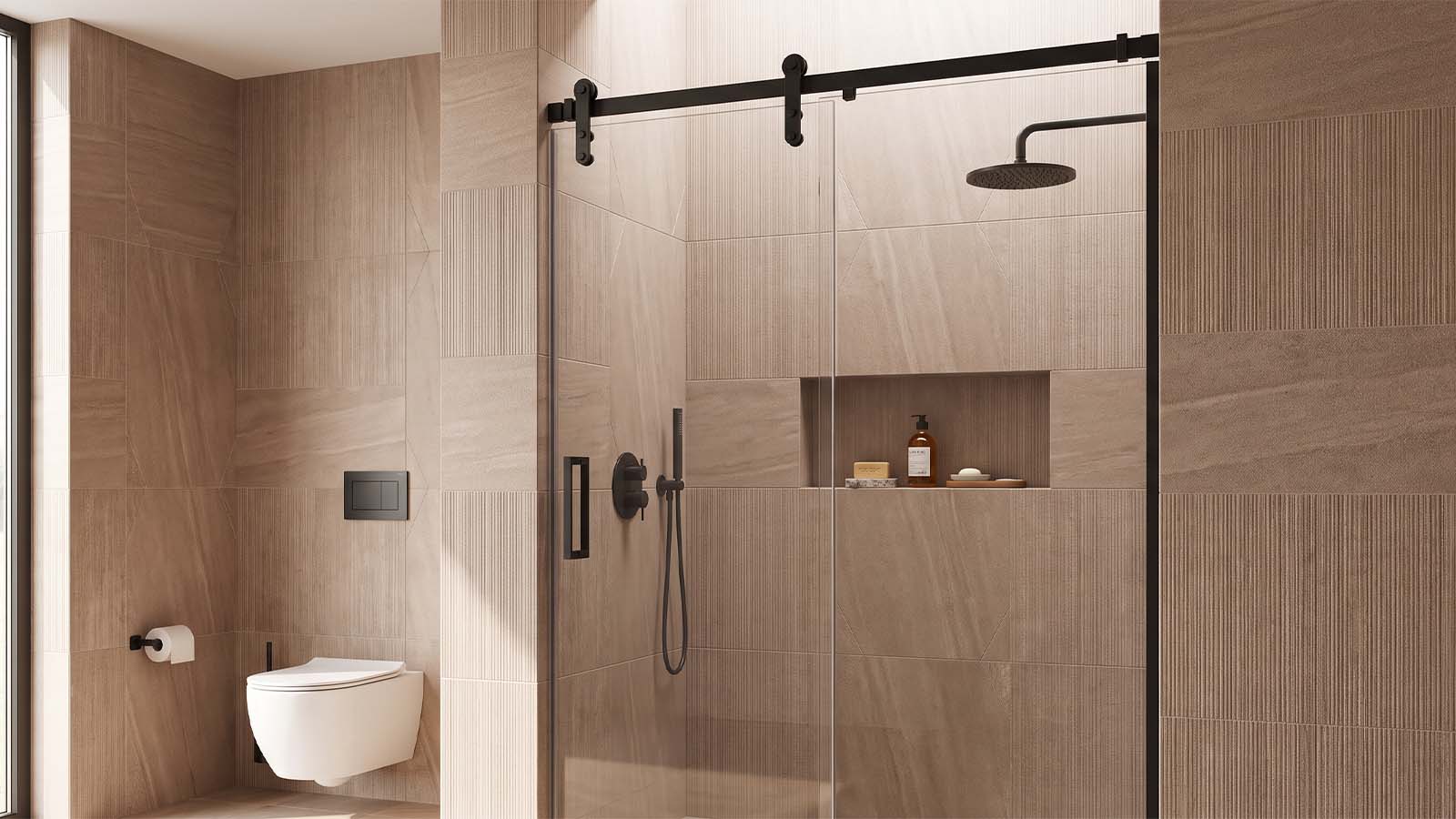
A genuinely modern bathroom is built around clean lines and pieces that appear to float. A wall-hung vanity unit and a wall-hung WC, sitting just clear of the floor with a concealed cistern built into the wall behind, are the clearest signal of the style. Surfaces stay flat and uninterrupted, hardware is kept to a minimum, and the palette leans towards a neutral scheme of white, grey and warm wood tones rather than pattern or ornament. A walk-in shower enclosure with a single sheet of glass does more for a modern bathroom than almost any other single item, since it keeps sightlines clear and the whole room feeling open. A countertop basin set on a floating vanity unit is another giveaway, since it adds a sculptural touch without disrupting the flat, uncluttered surface underneath it.
What Makes a Bathroom Properly Traditional
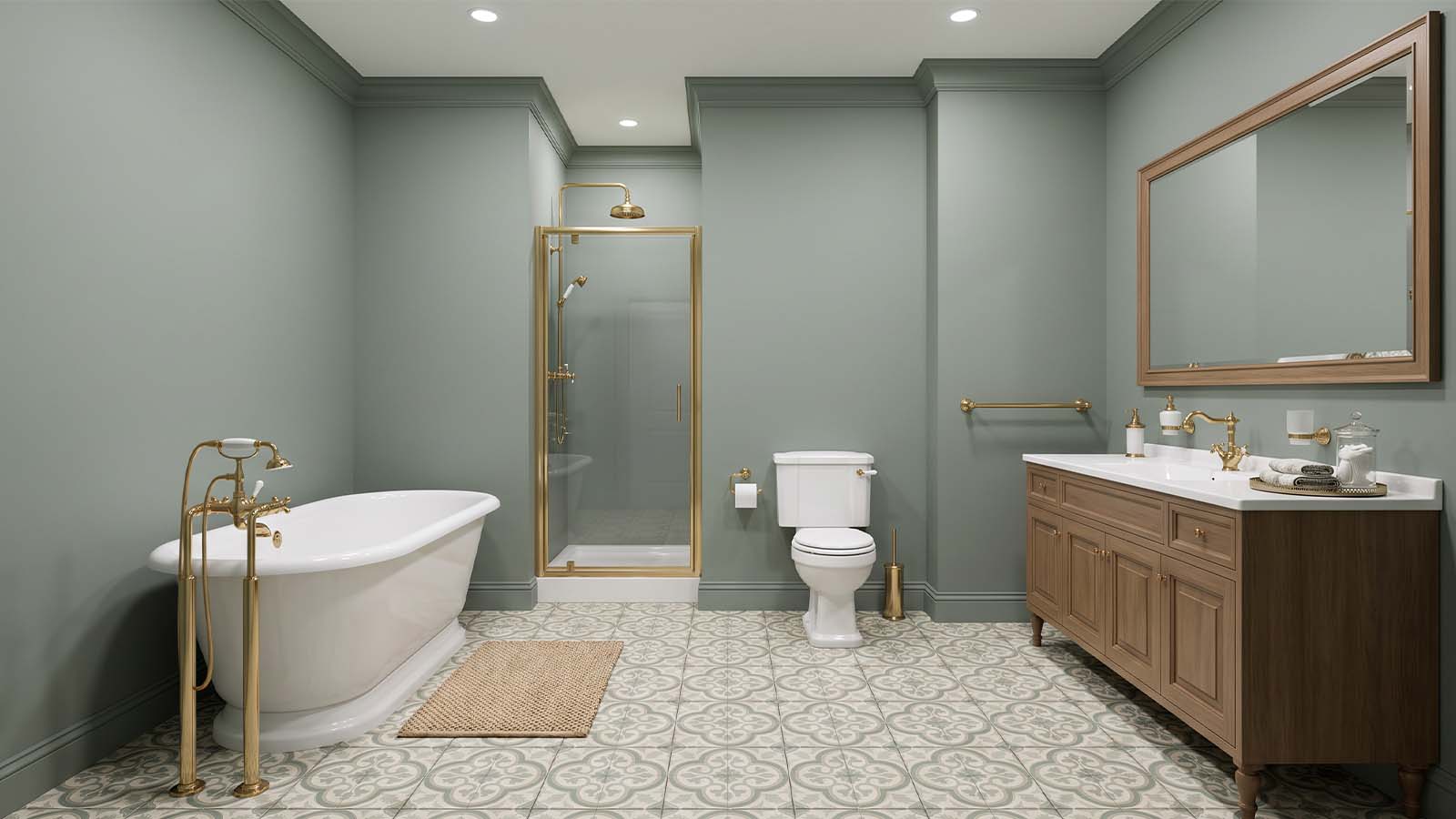
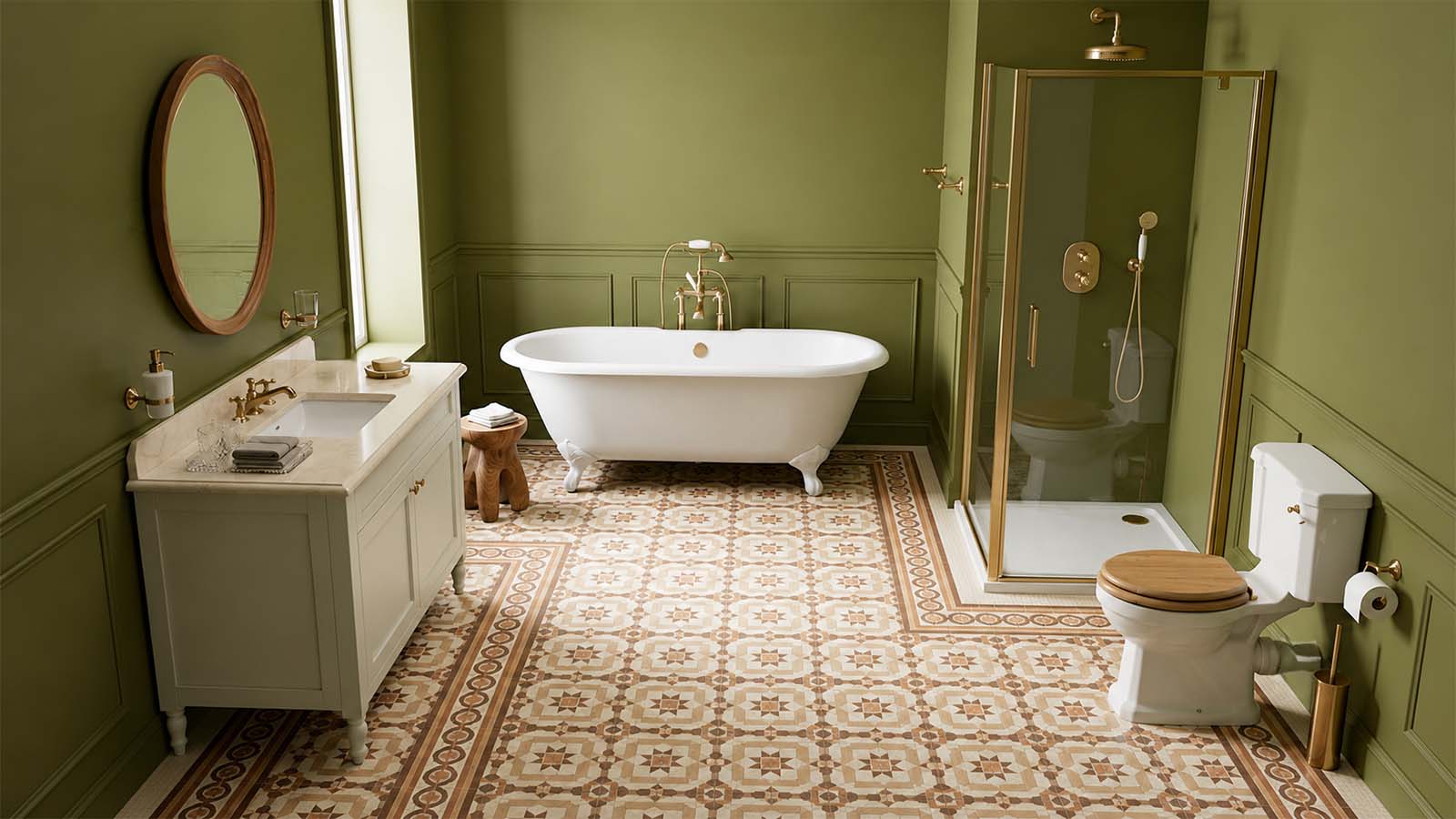
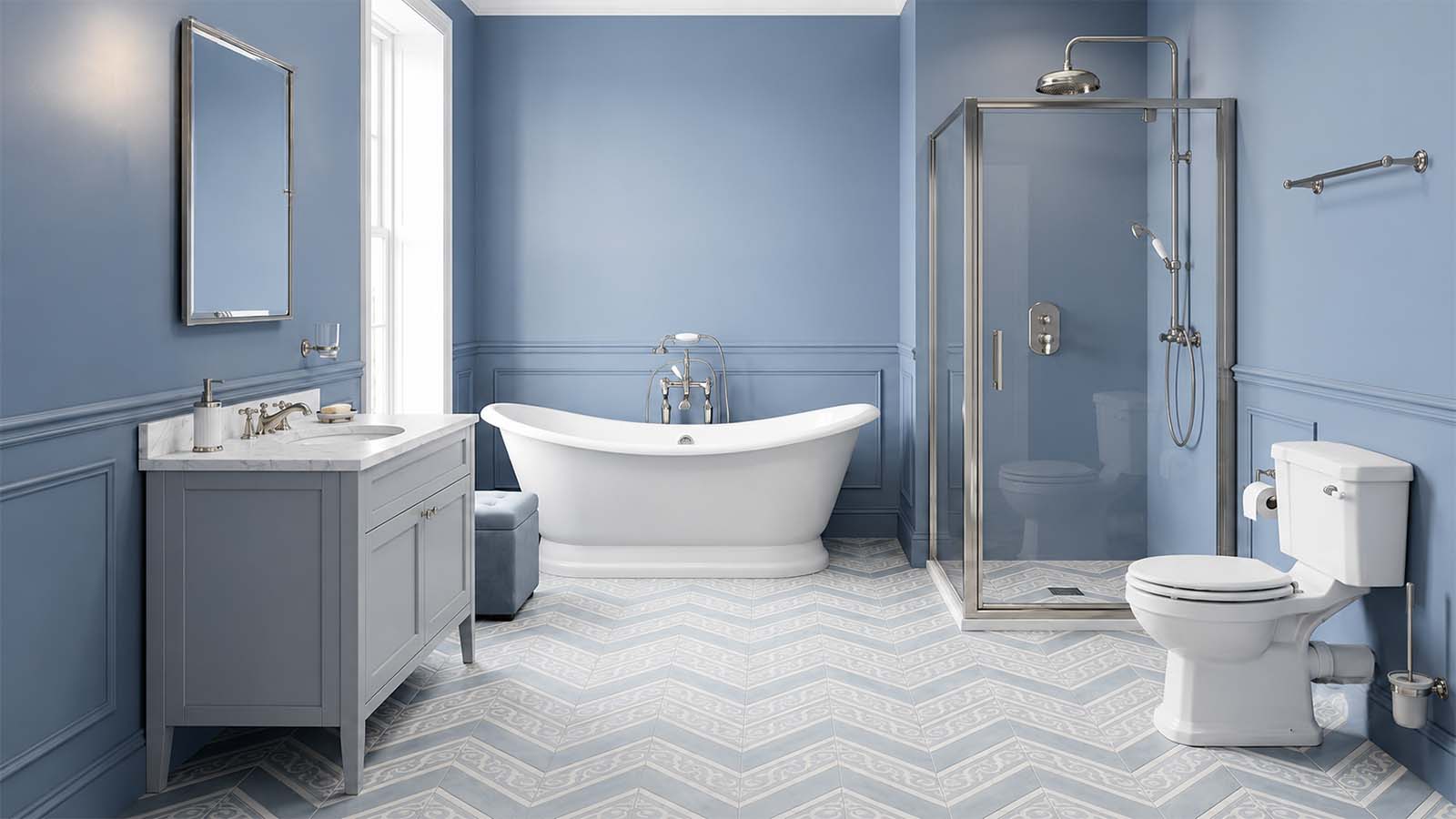
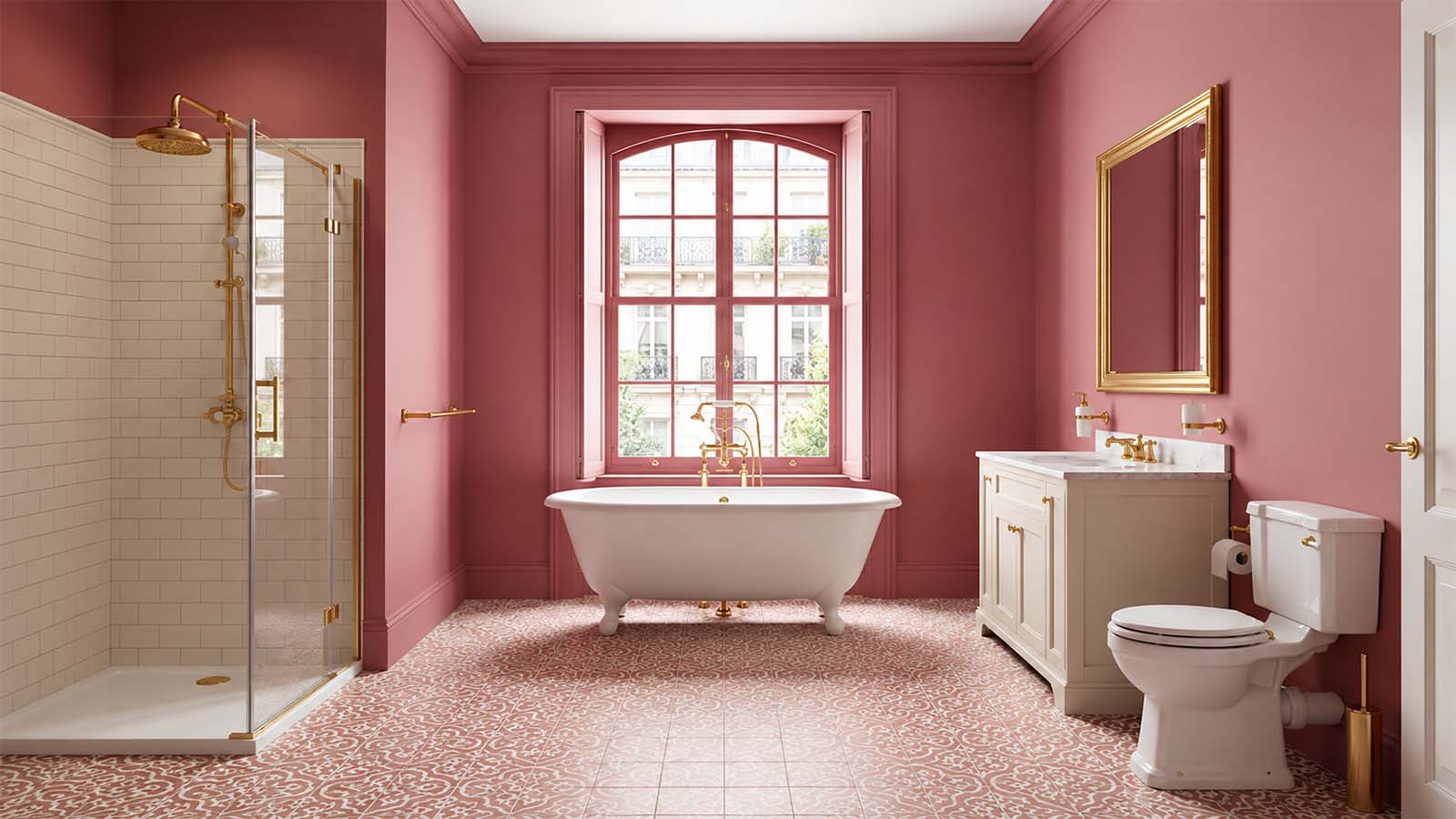
A traditional bathroom takes a contrasting approach. A freestanding bath, ideally a roll-top bath on ball and claw feet, sits proudly in the room rather than being pushed against a wall. A pedestal basin, exposed pipework and a high-level cistern all show their workings rather than hiding them, and period features such as panelling, cornicing and traditional cross-head taps add the ornate detail a modern room deliberately avoids. Sanitaryware in a traditional bathroom tends to reference an earlier era even when it is brand new, and that reference is really the whole appeal.
Consider the Character of Your Home First
Before falling for either style, it is worth asking one honest question: what does the rest of the house already look like? A period property with high ceilings, original cornicing and deep skirting boards often provides a natural setting for traditional bathroom design. A new-build property with minimal architectural detailing may be better suited to a cleaner, more contemporary scheme. This single question settles more style debates than any amount of scrolling through inspiration boards ever will.
When Breaking the Rules Actually Works
Either style can work outside its expected setting when the contrast is deliberate and carefully planned. A modern bathroom inside a Victorian terrace often works beautifully, because the contrast between an untouched period hallway and a crisp, minimal bathroom can feel considered rather than accidental, especially if an original feature such as a fireplace or cornicing is left visible nearby. What tends not to work is the reverse: a roll-top bath and pedestal basin squeezed into a boxy loft conversion with a low, sloped ceiling and no period detail anywhere else in the house. There, the traditional pieces do not contrast with anything. They may appear disconnected from the surrounding architecture.
Modern vs Traditional at a Glance
Once the bones and the history are out of the way, it helps to see the two styles laid out side by side, since the differences that matter day to day are rarely the ones people expect before they actually live with a finished room.
|
What matters |
Modern bathroom |
Traditional bathroom |
|
Typical cost to fit |
Concealed cisterns and stud walls often add to labour costs |
Installation is often simpler, though freestanding pieces can carry a higher price tag |
|
Cleaning |
Hides pipework well, but every water mark shows on flat, glossy surfaces |
More surfaces to dust, but little is hidden, so grime has fewer places to build up unseen |
|
Small-room performance |
Genuinely strong, since wall-hung pieces free up visible floor space |
Needs more floor space to look intentional rather than cramped |
|
Storage |
Often built into flat units and kept out of sight |
Usually relies on freestanding furniture chosen to suit the room |
|
Resale value |
No inherent premium over traditional |
No inherent premium over modern |
|
How it ages |
Tends to age as finishes and hardware trends shift |
Ages more slowly, but is still a moving target rather than a fixed style |
|
Fitting complexity |
Can be more involved due to concealed cisterns and stud work |
Generally simpler, though heavier fittings need a solid floor |
None of these differences make one style objectively better than the other. They simply help explain why a bathroom that looks stunning in a magazine can still be the wrong practical choice for a particular house, family or budget.
Yes, You Can Mix Them: Welcome to Transitional Style
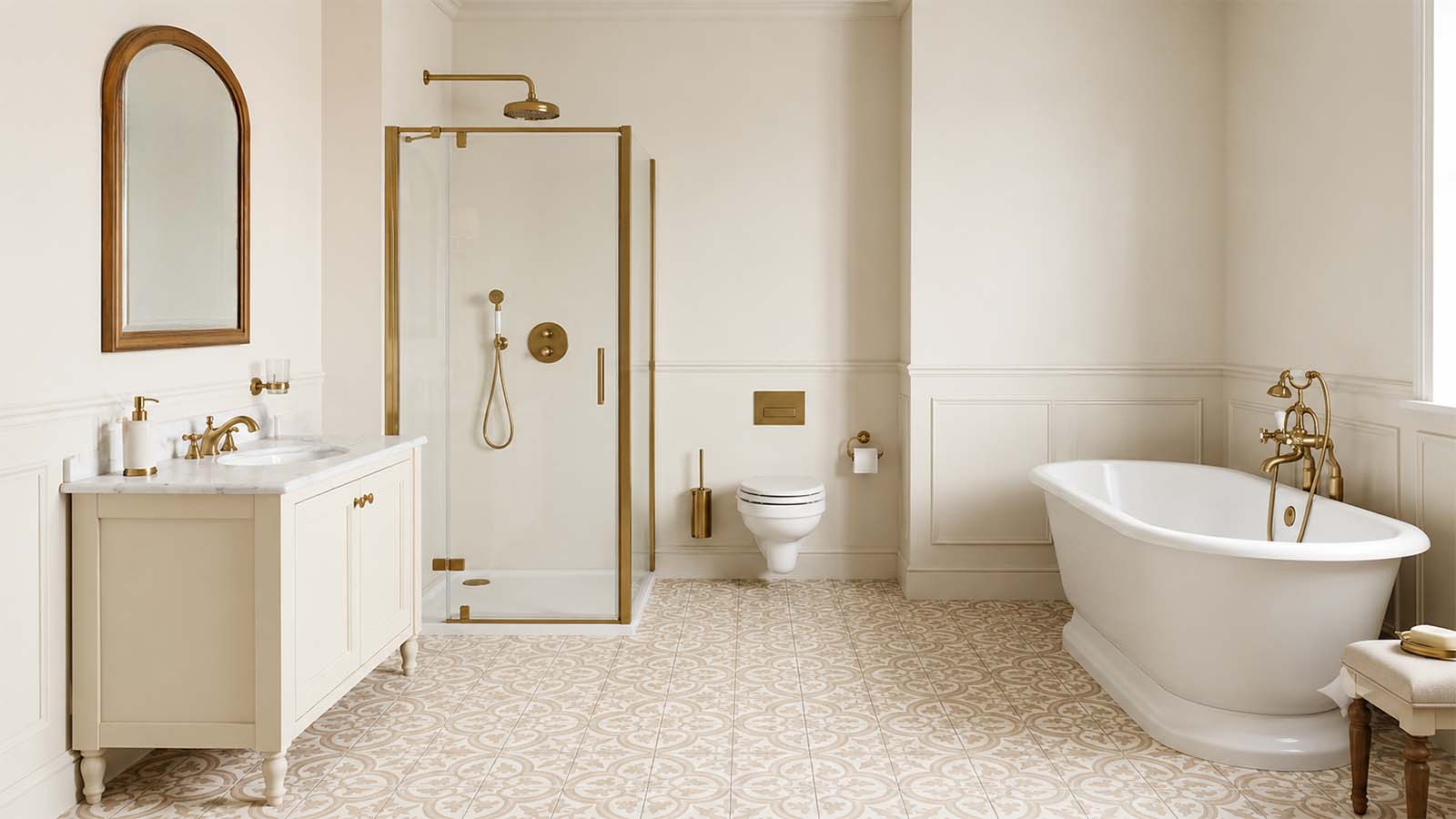
Modern and traditional can absolutely be combined, and when it is done well, it earns its own name: transitional style. The rule that prevents a mixed scheme from appearing visually inconsistent is simple: take the structural elements from one style and the details from the other. A room built on modern bones, a wall-hung basin, a concealed cistern, a shower enclosure with minimal framing, can carry traditional details such as an aged brass tap or a framed bathroom mirror without looking confused. Equally, a traditional bathroom with a freestanding bath and pedestal basin can carry contemporary accessories or a large-format floor tile without losing its character. What rarely works is mixing structural decisions. A wall-hung unit sitting beside a freestanding bath does not read as intentional. It may appear visually unresolved.
Which Style Actually Stands the Test of Time
Neither style is entirely immune to changing design trends. Traditional bathroom design is often sold as the safe, permanent choice, but it is really a moving target dressed up as a fixed one. A Victorian-style bathroom, an Edwardian Bathroom and a Shaker-style Bathroom all share the same traditional Label, yet they look noticeably different from each other, and each has its own trend cycle underneath the surface.
Modern bathroom design ages more visibly and more quickly, decade by decade. Gloss white units already read as distinctly early 2010s, and matt black hardware is fast becoming a specific moment rather than a neutral choice. For a design with greater longevity, prioritise a restrained palette and durable, authentic materials rather than following either style too rigidly.
Why Your Finish Matters More Than You Think
The shape of a room says one thing, but the finish says almost as much, and there is a far wider palette of bathroom metals to choose from than most people realise once they move past the obvious two.
Chrome remains the default modern finish and the safest, most flexible choice if you would rather not think about it again for a decade. Its cool, reflective surface suits crisp, minimal rooms and rarely looks out of place, though it does show water spots and fingerprints more readily than a brushed finish.
Brushed or satin nickel is the quieter alternative. It carries the same cool, silvery tone as chrome but with a soft, matte texture that hides small marks and everyday wear far better, which is why it turns up so often in bathrooms that need to look good with minimal upkeep. Because nickel sits comfortably in both cool, contemporary schemes and warmer, more classic ones, it is one of the few finishes that genuinely works across both styles rather than belonging to just one.
Aged or unlacquered brass leans traditional by nature, developing a soft patina over time that chrome and nickel never will, which suits a period bathroom that is meant to look lived-in rather than brand new. A polished brass finish reads more formally vintage, while a brushed brass sits comfortably in either camp, which is exactly why it has become such a popular middle ground for anyone attempting a transitional look.
Matt black generally reads as contemporary and often introduces an industrial influence, so it needs to be handled carefully in a period room or it can look like an accessory bought for an entirely different bathroom. It pairs naturally with flat, concealed fittings and adds a strong graphic edge that ornate, traditional pieces rarely need.
Bronze and copper sit at the traditional end of the spectrum, warm and textured in a way that suits panelling, exposed pipework and natural materials such as wood and stone. Both develop character with age rather than staying pristine, which is part of the appeal in a room built to look established rather than new.
Whichever direction you take, matching your accessories to the metal finish already chosen keeps the room feeling considered rather than assembled from three unrelated ranges. A dedicated guide on pairing bathroom accessories with your existing taps is worth reading before committing to a full set, and mixing two finishes deliberately, one dominant and one as an accent, is a far safer route to a considered-looking room than sticking rigidly to a single metal throughout.
Mirrors and Lighting in Modern and Traditional Bathrooms
Beyond the sanitaryware and the metalwork, mirrors and lighting make a significant contribution to the room’s overall character, and they are just as capable of undercutting a style as the wrong towel rail.
A large, unframed or minimally framed mirror set flush against the wall is the modern default, since it reflects light without adding visual weight and keeps the flat, uncluttered feel of the rest of the room intact. Slim LED strip lighting or a discreet backlit mirror does the same job as a traditional light fitting without introducing any extra hardware to look at.
A traditional bathroom asks for the opposite treatment. A mirror with a decorative frame, in an arched, oval or ornately detailed shape, gives the eye something to rest on, and it is usually paired with wall-mounted sconces flanking the mirror rather than a single fitting above it, which softens the light and avoids the harsh, clinical glow that overhead lighting alone can create. A statement pendant or a small chandelier over a freestanding bath does for a traditional bathroom what a walk-in shower screen does for a modern one: it signals the style instantly.
The safest rule with both mirrors and lighting is the same one that applies to metal finishes. Choose the shape and fitting style that matches the room's bones first, then let the frame or hardware finish carry the smaller traditional or modern accents if you are working in a transitional space.
Flooring and Tiles: The Ground Rules
Flooring rarely gets mentioned until the very end of a renovation, yet it sets the tone for the whole room as much as the bath or basin does.
Large-format porcelain tile, laid with minimal grout lines, is the clearest modern flooring choice, since fewer visible joins keep the floor reading as one continuous, flat surface, which is exactly the effect a wall-hung suite is trying to achieve above it. Stone-look and concrete-look finishes follow the same logic, favouring a calm, uninterrupted surface over pattern.
A traditional bathroom tends to favour smaller-format tiles instead, whether that is a classic hexagon mosaic, a patterned encaustic-style tile, or a checkerboard laid on the diagonal. These smaller tiles introduce texture and detail underfoot in the same way panelling and cornicing do at eye level, and a muted, period-appropriate colour palette keeps the effect feeling authentic rather than themed.
The two do not have to be kept entirely separate. A neutral, large-format modern floor tile can sit comfortably beneath a freestanding bath, and a small decorative mosaic can work as a border or feature strip within an otherwise contemporary room. As with metal finishes, the safest approach is to let one style lead the floor and use the other only as an accent.
Space and Layout: How Each Style Uses a Room
Floor space is where the structural difference between the two styles is felt most directly, in a small ensuite as much as in a generous family bathroom.
A modern bathroom, wall-hung and largely concealed behind one flat wall, reclaims visible floor area that a traditional layout simply cannot. That advantage is most obvious in a tight or awkward room, where every wall-hung basin and recessed cistern buys back space a pedestal basin or a boxed-in cistern would otherwise take up. In a larger room, the same principle just shifts from necessity to choice: an open, minimal layout can make a generous bathroom feel calm and uncluttered rather than merely spacious.
A traditional layout, by contrast, generally needs more room to do its job properly. A freestanding bath needs clearance on every side to look intentional rather than crowded, and a pedestal basin, an airing cupboard or a piece of freestanding storage furniture all take up floor area a modern room would conceal. That is not a flaw in a large family bathroom, where the extra clearance around a roll-top bath is part of the appeal, but it does mean the style has far less room to work with once the floor plan shrinks.
The practical upshot is that layout, not square footage alone, decides which style will feel comfortable in a given room. A generous traditional bathroom can feel just as considered as a compact modern one, provided the furniture and fittings are given the clearance the style actually needs.
Cleaning and Upkeep
Neither option is genuinely low maintenance. They are simply demanding in different ways.
A modern bathroom hides its pipework beautifully but shows every single water spot and fingerprint on its flat, glossy surfaces, so it often needs wiping down more often to look as good as the photos suggested it would. A brushed or matte finish on the taps and hardware softens this slightly, since small marks are far less visible on a satin surface than on polished chrome.
A traditional bathroom has more surfaces to dust, panelling, exposed pipework and ornate detail among them, but because so little is hidden away, there are fewer dark, concealed corners for grime and mould to build up unnoticed. Smaller floor tiles do mean more grout lines to keep clean, which is worth factoring in alongside the dusting. The more suitable option will depend partly on your preferred cleaning and maintenance routine.
Fixtures That Can Disrupt the Overall Style
Heating and lighting are common sources of visual inconsistency because they are often selected late in the renovation.
A sleek chrome ladder rail installed in a period bathroom complete with cornicing, a roll-top bath and a pedestal basin is one of the most common design mismatches, as it immediately introduces a contemporary feel regardless of everything else in the room. The reverse combination, a traditional column radiator set within an otherwise streamlined modern bathroom, is less common but can be equally jarring. The same mismatch shows up just as easily in a mirror or a light fitting: a frameless, backlit mirror in an otherwise ornate traditional room reads as a leftover from a different renovation, exactly as an elaborately framed mirror does above a wall-hung modern vanity.
If the space is meant to feel cohesive rather than undecided, a programmable towel radiator or an energy-efficient heated towel rail should be selected as carefully for its finish and form as for its heat output, and the same discipline should be applied to whatever mirror and lighting go with it. These are some of the few fixtures in the room that sit at the intersection of practicality and style, which is exactly why they are so easy to get wrong.
Does Style Actually Add Value to Your Home
Neither style adds value solely because it is modern or traditional. Estate agents rarely attribute a sale to a wall-hung basin or a roll-top bath alone, and there is little evidence to suggest that either modern or traditional bathroom design commands a premium simply because of the label attached to it.
What does add value is a bathroom that feels at home within the wider property. A mismatched bathroom is often one of the first things buyers notice and one of the first renovations they mentally factor into their offer. Whether modern or traditional, a well-designed and carefully fitted bathroom that complements the rest of the house is likely to appeal more strongly than an expensive scheme that conflicts with its surroundings.
Which Style Suits Your Situation
Period property: Lean towards a traditional scheme, or introduce a carefully considered modern contrast if the rest of the house already contains enough original features to support it. Either approach can succeed, provided it responds to the character of the building rather than ignoring it.
New build: A modern bathroom is usually the better choice, as there is little period detailing elsewhere for a traditional design to complement. In many cases, a freestanding bath in a compact, boxy room struggles to justify the space it occupies.
Small en suite: Modern design is often the most practical option because it can make more efficient use of limited floor space. Wall-hung furniture and slimline shower enclosures create a far more efficient layout than freestanding pieces ever could.
Family bathroom: A transitional approach often works best, combining contemporary foundations with a few traditional accents. Modern fixtures offer durability and easy maintenance, while details such as framed mirrors or brass taps introduce warmth and character.
Rental property: A neutral, predominantly modern scheme tends to appeal to the broadest range of tenants and ages more gracefully between occupancies, as it is less likely to feel dated than a strongly themed traditional bathroom.
Loft conversion: Modern styling is generally the better fit, since sloping ceilings and awkward proportions rarely complement ornate, freestanding fittings. A roll-top bath tucked beneath a low eave often appears squeezed in rather than intentionally placed.
Five Mistakes That Undo a Good Bathroom
Mixing major design choices rather than smaller details is one of the most common mistakes and among the hardest to correct later. A wall-hung basin paired with a freestanding bath, for example, can leave the room feeling uncertain of its identity. Leaving practical elements such as the heated towel rail, the mirror or the lighting until the end of the project often creates a clash with the brassware and other fittings rather than a coordinated finish.
Another frequent error is ignoring the character of the rest of the house and choosing a style solely from an inspiration board, which can make the bathroom feel disconnected from the surrounding spaces. It is also a mistake to assume that traditional bathroom design is automatically timeless; like modern design, it will eventually show its age, albeit at a slower pace.
Sticking to a single metal finish throughout, rather than treating nickel, brass, black and bronze as a genuine palette to choose from, is another common trap, since it can leave a room looking flat rather than considered. Finally, many homeowners become fixated on the latest trend within modern bathroom design, whether that is a fashionable accent colour or a particular tile pattern, instead of opting for a genuinely neutral palette. This is often the first aspect to feel dated and one of the first things people notice when the time comes to sell.